Should people stay away from National Parks as lockdown restrictions ease?

‘Yay! We can finally meet in groups outdoors!’ cry the people of England, as COVID-19 pandemic restrictions are lifted. But does that mean we should be heading en masse to beauty spots? Should you be shoving your kids, Great Auntie Betty and the new lockdown puppy into your four-by-four and setting off for the New Forest, the Yorkshire Dales or Dartmoor? It seems the guardians of our most beloved outdoor spaces don’t think so.

National Parks Fortnight

In April, the UK’s National Parks normally runs a big marketing push, called the National Parks Fortnight, whereby it tries to persuade the people of Britain to detach their bahookies from their sofas and visit the countryside. This year, the whole campaign has been quietly shelved.

Could this be linked to what happened last summer, when our National Parks saw the biggest increase in visitor numbers in their history? With foreign travel off-limits and a population stir crazy after months cooped up at home for the first lockdown, horrible scenes unfolded in some of the UK’s most precious landscapes.

A Tsunami of Poo

Places like the Lake and Peak Districts were overrun with people, their litter and a veritable tsunami of poo. ‘Fly camping’ – people buying cheap tents and then leaving them behind – became a thing in supposedly protected habitats. Visitors caused fires by lighting barbecues on tinder-dry moorlands. They even cut down trees and damaged dry stone walls. The last thing our National Parks need is another onslaught of all that.

Indeed, last year, visitor numbers soared so high on the day the first lockdown ended that some National Park authorities ended up pleading with people to go home. Never mind cancelling their annual marketing campaign, it’s a wonder they haven’t launched a proactive national campaign for the 2021 season telling the great British public to stay away.

More Nature

Of course, the answer isn’t that people experience even less nature. The truth is that we all need much, much more of it. In the age of the linked climate and ecological crises, the last thing we want is for people to become further detached from the awe-inspiring ecosystems on which we all depend. We are a part of the natural world. We can’t survive without healthy soils, abundant seas and hordes of pollinating insects – as well as rich varieties of fungi, plant life, trees and wildlife. At the moment, too many people have lost touch with that fact. And that’s dangerous. We all need to reconnect with nature, so we can band together – and save it.

Nature in Trouble

The horrifying reality is that nature is in deep trouble. In the UK, more than half our wildlife species are in decline and 15% are threatened with extinction. Hedgehogs, turtle doves, puffins, dolphins, bees, moths, butterflies, newts, and bats are all in danger. Forests cover a meagre 2.5% of the land. Only a third of our fish stocks aren’t overfished. As we have tamed our land, we’ve also stripped the life from it. Our soils are being rendered infertile. Experts warn that we only have about 30 or 40 harvests left, if we carry on polluting soils with artificial chemicals and fertilisers. At the same time, so many humans have lost touch with the wonders of the natural world. British children suffer from ‘Nature Deficit Disorder’, which is damaging to both their wellbeing and their academic achievement. We have quite simply forgotten that we are nature and when we mistreat it, we mistreat ourselves.

Expansion of Wild Places

The problem is that there aren’t enough wild places. Our fifteen National Parks don’t have enough acres – and, even so, many experts deem them not wild enough. They’ve been degraded and overmanaged. What we quite clearly need is an increase in real wildernesses – more spaces for flora and fauna to recover and for humans to reconnect with their natural selves.

This is why conservation and wildlife organisations have a campaign to restores 30% of the UK’s land and sea to nature by 2030. This doesn’t just mean expanding our existing National Parks, but creating a series of interconnected rich habitats, thriving with life. It involves reinstating missing species and reinvigorating defunct forests, heaths, peatlands, wetlands, peat bogs, saltmarshes, kelp beds and reefs.

Of course, this needs to go hand-in-hand with more nature education. If people aren’t taught about the consequences of not shutting gates, collecting rubbish or guarding against fires, then they’re not going to do any of it.

Behaviour Guide

The immediate solution for those wondering if they should head to a National Park this Easter weekend is to do so following the authorities short guide on how to behave on their land during COVID-19 restrictions. It basically boils down to this:

  1.  Don’t trash the place or the staff.
  2. If there’s a crowd bigger than the one at the Cheltenham Festival, get out of there.
  3. For god’s sake, use a toilet.

On COVID-19 and Meat

“I really want more deadly viruses that kill millions of people and keep everyone else stuck at home for months on end,” said no-one ever. So why aren’t we talking about how to avoid another virus like COVID-19 spreading through human populations again?

Coronavirus is no welcome visitor to our biosphere. It’s contagious. It hinders breathing. And it kills your granny. We’re all completely and utterly over it. And yet, a mainstream conversation about how we avoid such a virus running rampant through human populations again is not taking place – even though evidence suggests that catastrophic scenario is increasingly likely, unless we change our ways.

The rise of zoonotic diseases

COVID-19 is a zoonotic disease, which means it’s caused by the transmission of pathogens from animals to people. Over the last century, there has been an alarming increase in the number, frequency and diversity of zoonotic disease outbreaks. Indeed, they may have more than tripled in the last decade. Today, 60% of emerging infectious diseases in humans are zoonotic. This has not happened by chance.

The history of zoonotic diseases

For most of human history – around 2.5 million years – we were hunter gatherers. In tiny groups we roamed the land, sustaining ourselves with handfuls of berries grabbed from trees and intermittently stabbing the odd rabbit with our spears. Or something like that.

The Agricultural Revolution changed everything. Just a bit more than ten thousand years ago, in a part of what we now call the Middle East known as the Fertile Crescent, farming was born. People began settling in communities, planting crops and keeping livestock for meat. A brave few even tried drinking the secretions of these herbivores’ mammary glands (and if you want to know more about that, please click here). Completely uncoincidentally, this is also when zoonotic diseases emerged.

Once humanity started sharing their lives (and often homes) with cows, goats, sheep, pigs and chickens, evidence suggests that pathogens from wild animals were passed to humans via their livestock – just like when the bat bit the pangolin that purportedly started the COVID-19 pandemic.

The link to meat

These diseases emerged out of meat production and to this day they are associated with it. Consider the origins of just a few of them:

  • The Spanish Flu, which affected a third of the global population, is believed to have started in livestock farms in Kansas, USA.
  • The HIV virus was transmitted from chimps to humans via the bushmeat trade in central Africa in the 1980s.
  • Mad Cow Disease started on British cattle farms in the 1990s.
  • In China, bird flu passed from wild birds to farmed poultry populations in the early noughties.
  • Swine flu originated in Mexican pig farms.
  • COVID-19 is suspected to have come to humans from bats – potentially via pangolins or other exotic animals sold for meat in the markets of Wuhan, China.

The pattern is undeniable. Zoonotic diseases are linked to the keeping of livestock and the demand for meat. And in modern times it’s not just about wet markets or exotic wild meats. Research from animal welfare campaigning organisation Compassion in World Farming states that ‘…the crowded, stressful conditions of factory farms can be the perfect breeding ground for infectious diseases.’

Animal factory farming and zoonotic disease

With the rise of the US-style ‘mega farm’ throughout the West, a huge percentage of supermarket meat is the result of intensive practices, in which great numbers of animals are crammed en masse into industrial units, to live short, brutish lives without access to the outdoors. These places are akin to petri dishes for zoonotic diseases. The animals are bred for fast-growth and constantly stressed, both factors which lower their immunity. Combined with the density of their numbers and often unhygienic conditions, it makes an ideal environment for a mutating virus or antibiotic-resistant superbugs to emerge. The more factory livestock farms we have, the more chance there is of another pandemic – potentially of an even more deadly disease.

And the situation is only set to get worse because the global demand for meat is rising, largely in what is described as the developing world. As living standards rise, people can afford to start incorporating meat into their daily diet. (Although, it should be noted that most meat and dairy production and consumption is still down to the so-called developed world. Industrialised countries – the US, Canada, Europe and Australia – account for just 15% of the world’s population but 37% of meat consumption and 40% of that of milk).

Consequently, the world now produces three times as much meat as it did 50 years ago. A staggering 70 billion land animals are slaughtered annually for consumption. To put it in human terms, that’s like slitting the throat of nearly ten times the number of people currently on Planet Earth. Every single year. It’s an unimaginable amount of death.

Slaughterhouses and COVID-19

It’s not just that meat production helps create zoonotic diseases. It also spreads them. Abattoirs have become hotbeds for COVID-19 worldwide. Only care homes and prisons rival them for human contagion of the virus.

There are numerous reasons for this. Slaughterhouses are cramped, with distances between workers routinely less than the recommended two metres. They’re also loud, with workers having to shout to each other over the noise of terrified animals, stun guns, circular saws and hide-removing machines. This increases airborne transmission. Abattoirs are also kept cold, which is what COVID-19 prefers. Its workers repeatedly touch various parts of an animal carcass that their colleagues also touch (although full research into how long the virus can stay alive on dead body parts has yet to be published). Often cleanliness is not what it should be. A quarter of UK abattoirs fail to meet basic standards – even cross-contaminating meat with faecal matter. They make the perfect environment for this virus. The consequences speak for themselves.

In the US, the location of some of the world’s biggest slaughterhouses, 1,377 meat processing and packing plants have had coronavirus outbreaks, with over 82,000 workers testing positive. Indeed, North America’s biggest coronavirus outbreak started in a meat-packing plant in Canada, involving 1,560 cases. In Germany, public health authorities grappled with a huge COVID-19 outbreak in Gütersloh, North Rhine-Westphalia. Of 7,000 workers, more than 1,500 tested positive. In the UK, meat processing units are also virus epicentres. Outbreaks have been linked to abattoirs in: Anglesey, Wales; Wrexham, Wales; Grantown-on Spey in the Highlands; Great Witchingham, Norfolk; Redruth, Cornwall; and Cleckheaton, Yorkshire – among many others. Clusters of positive tests have also surrounded meat factories in Australia and Brazil.

Biodiversity crisis

Zoonotic diseases are also growing in frequency and number due to human destruction of the world’s wild places. Habitat loss forces any surviving wildlife to move nearer to humans, increasing the chances of passing on their pathogens. Deforestation is a key example. Between 1990 and 2016, the world lost an area of forest larger than South Africa. This erosion of natural habitats has brought humanity closer and closer to wild animals harbouring pathogens that can pass to us and cause viruses. The Chinese bats held responsible for COVID-19 are a case in point.

The population of Wuhan is now eight times bigger than it was in 1950. The city has exploded in size, resulting in deforestation around its former city limits and forcing once rural bats – normally shy, reclusive creatures of the night – closer to its livestock markets. They didn’t set out to bite the pangolin, or whichever animal was the original source of the virus. They were forced into it by the human destruction of their home and natural food sources.

And what’s one of the main causes of habitat loss?

That’s right, you guessed it.

Meat.

Globally, the number one driver of deforestation is beef. It’s behind the conversion of forests to grasslands and savannahs, depriving forest flora and fauna of their essential ecosystem. The second biggest driver of deforestation is soy. Since 1950, soy production has increased 15 times over. But don’t think that’s down to those preachy vegan tofu munchers or the Far East’s penchant for soy sauce.  Some 90% of soy grown globally is used to feed the increasing numbers of industrially-farmed livestock – including a large percentage of the chickens and pigs killed to make the meat found in British supermarkets.

As it happens, habitat loss is also one of the main causes of the sixth mass extinction, so by not eating farmed animals you can not only contribute to curbing zoonotic disease but also save wildlife too.

It boils down to this:

If you don’t like COVID-19, don’t eat cows. If you like panthers, orang-utans and parakeets, don’t eat cows. (And, obvs, if you like cows, don’t eat cows.)

Media focus

When it comes to coverage of COVID-19, the media is fixated on three things: the rising tide of death, the hope provided by the new vaccines and the demonisation of those who fail to follow lockdown rules.

Of course, these issues are central to this terrible, unfolding tragedy. But why are TV pundits and news programmes not regularly talking about the scientifically-proven links between pandemics and animal agriculture? Why is the bigger context surrounding such viruses so routinely and studiously avoided when so much is at stake? Why are we not trying to stop this nightmare happening again?

After all, another new virus will mean another new vaccine and we all know how long they take to make and then disseminate. Can we sit back and risk this all happening again? Are we so careless about the prospective loss of yet more loved ones? Is the global meat and dairy industry really so powerful that their financial interests are more important than human and planetary health?

Nature’s warning

COVID-19 is not some fluke instigated by the weird taste buds of the Chinese. It’s just the latest in an ever-increasing number of viruses transferred from animals to humans.

Humanity’s taste for meat helped create diseases like COVID-19. Modern intensive animal farming methods are accelerating their proliferation – as well as driving climate change.

Last year the UN issued a report linking the recent rise in zoonotic diseases to the increasing demand for meat and the rise of intensive farming. The message was clear. When it comes to pandemics, the greater the number of animals we farm, the greater the chance of another one.

The UN’s environment chief Inger Andersen issued a warning during the first outbreak of the pandemic last year. She said humanity was placing too many pressures on the natural world with damaging consequences – and warned that failing to take care of the planet meant not taking care of ourselves.

She was right. We are eating ourselves into disease and extinction. Luckily, there is something we can do about it. It starts with your next meal. For the health of your loved ones and your planet, are you ready to ditch that steak?

After the Coronavirus Pandemic

Thanks to the coronavirus pandemic, things are never going to be the same again. The status quo is over. Our economies are going to be broken and our societies radically altered. Everything is up for grabs.

Of course, our attention is currently focused on the urgent threat posed by this virus to vulnerable people – whether they be older or those with underlying health conditions – and the health workers caring for them. We all owe a massive debt to those putting themselves on the line.

As the rest of us sit the pandemic out at home, however, should we take a moment to think about the aftermath? In between online meetings, home-schooling our kids and binging on Netflix, should we pause and reflect on the way we’ve been living – and where it’s been leading? Can we find the time to consider what comes next?

Certainly, the idea that business-as-usual couldn’t be stopped has been shown to be a sham. Our lives have changed overnight. The world is no longer the same. The streets of New York, London and Delhi are empty. In car-free streets, birdsong is audible in once more. The peace and quiet has already allowed us to remember that we depend on each other – with neighbourhood support groups springing up all over the globe. Will this continue into the future? We can only hope.

What does this all mean for the climate and biodiversity crises? Well, for a start, we have the evidence of what could happen, if we work together to make it so. Since the coronavirus pandemic started, emissions have dropped substantially. And while the canals of Venice might not yet be filled with dolphins, wildlife is feeling bold enough to start exploring urbanity.

The UN’s environment chief, Inger Andersen, has said this pandemic is nature sending us a warning. She said that humanity is placing too many pressures on the natural world – and that by failing to take care of the planet, we are failing to take care of ourselves. He is right. It feels like Mother Nature is trying to tell us something. But will we listen?

Now we’ve all been switched off autopilot, hopefully we can all see the reality of the system that’s brought us here. A system whose elected officials think old people should sacrifice themselves on the mythical altar of the economy. A system that means one of the most powerful people on Earth is willing to gamble the lives of millions for the sake of some made-up numbers on a screen. A system that prizes the fiction of money over the ecosystems upon which all life on Earth depends.

It sounds like a Monty Python sketch. And yet it is the system we’ve been living under. Our ancestors first created money to make their lives easier and more comfortable. Somehow, over the course of the subsequent centuries, we’ve ended up in a place where our only apparent value lies in our ability to make and spend it. When did the switch take place? How did we get things so wrong? And why are we sitting back and letting the markets destroy our beautiful world?

One thing’s for sure, in the decades to come, no-one will ever be able to tell this generation of kids that taking urgent widespread action just wasn’t possible. If there’s a failure to act, they will know that it was ours. The truth is we cannot wait for their generation. It will be too late by then. For their sakes, we need this to be the moment of crisis that makes us face reality and change course. Can we do it? Can we band together and build a kinder, fairer, greener world out of the ashes of the old one? Because if we don’t stop and consider this possibility now, when will we?

How to stop the stuff

Human beings now consume a hundred billion tonnes of materials each year. Usually, I follow-up my first sentence’s factual statement with a joke, but I’m all out of gags right now. Our behaviour is the very definition of insanity. What are we doing? We’re acting like our beautiful world’s resources are unlimited when they’re quite clearly not. We’re cutting off our own life supply. Worse still, we’re cutting off our kids’ life supply. This can’t go on.

It’s time we – especially us rich Westerners who are most responsible for this quagmire of stuff – changed. We need to live much simpler, less materialistic lives. And you know what? Some of these changes just might make us that bit happier. After all, late-stage capitalism hasn’t brought about a state of collective bliss. It’s created a mental health crisis. It’s not for nothing that you can now pay someone to come and help you declutter your home or that Marie Kondo has made a fortune out of telling people less is more. Try not to see it in terms of sacrifice but simplification.

So what can you do?  To get started, here are three easy ways to stop your personal deluge of stuff:

Change how you gift

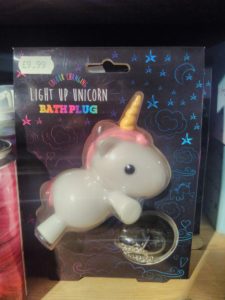
In our culture it’s now traditional at Christmas and birthdays (and a whole load of other celebrations in between) to give and receive a whole load of stuff. In the consumer society that’s allegedly how you show you care. The thing is, most of us don’t even need or want that stuff. After the materialistic frenzy of Christmas, charity shops are full of unwanted gifts. Takeback Thursday has even become a thing.When we try to buy presents for others, we struggle to come up with ideas, because too many of us are drowning in stuff already. That’s why the whole novelty gift market exists. It’s just a load of useless guff. Considering we’re in the middle of a climate emergency, why are we squandering our precious resources on things no-one wants in the first place? This, people, is how the world ends. Not with a bang, but with a light-up unicorn bath plug. To try and be more eco-friendly, why not give food or drink as presents? Or you can take your loved one out for a meal or buy them tickets for the theatre or cinema or a spa day? Even better, plant a tree for them. It’s also a good idea to cut down on the sheer number of presents you give and receive. The adults in a family can agree that the exchange of presents will from now on just be for children.  Tell old friends you’d rather have a phone chat with them than a present. It’s a cliché, but time really is the most precious thing. How we let ourselves believe that love is shown by maxing out your credit card on random junk, I’m not quite sure

Cut back on fast fashion

The fashion industry is one of the least eco-friendly on the planet. The average British person buys a staggering 26.7 kg of clothes each year.  Most of these are made from synthetic fibres, which are made with fossil fuels. When you wear polyester, you are literally wearing oil and petrol. The resulting emissions are eyewatering. In just one month, those from new clothes bought in the UK are greater than those from flying a plane around the world 900 times, according to an Oxfam study. If we don’t change the way we buy clothes, fast fashion could use a quarter of the world’s carbon budget by 2050. Considering that most of us don’t even wear half of our wardrobe, this is an outrage. The problem is cheap fashion is everywhere in the high street. Clothes have never been so affordable or, as a result, disposable. The unfortunate truth is that this is possible because of the exploitation of the workers in developing countries who make most of it. Wages are typically very low and conditions bad.  Worse still, fast fashion depends on child labour. The International Labour Organisation says there are 170 million children worldwide forced into labour, with many in the garment and textile industries. If you’d rather not contribute to an industry that’s destroying our planet and ruining lives, there are plenty of alternatives. You can buy second hand or save up and spend money on a high quality piece of clothing that will last. You can try to avoid manmade fibres and search out organic, natural fabrics instead. You can look out for ethical brands. Ultimately, you can just buy less.

One in, one out

An old friend of mine told me about her ‘one in, one out’ policy when it came to household stuff years ago. It’s taken me a while to get there, but now I use it too. It means every time you buy something new for your home, you have to give something else to charity (or to a friend/family member or perhaps freecycle it). It really does make you stop and think about how much you need your new purchase. Considering the value of the clutter in British homes is estimated to be £32.7 billion, it’s just common sense. The age of unlimited stuff is over. It has to be.

When will climate deniers go the way of the dodo?

A bunch of Dutch sailors landed on Mauritius in 1598. The first Europeans to set foot on the Indian Ocean island, they encountered the awkward, slow-moving bird known as the dodo. Big and flightless, it was easy prey for them and their domesticated animals. By 1662 it was extinct.

Today, our only hope is that another ungainly, sluggish species is rendered extinct – and even more quickly. The climate denier.

Of course, I’m not saying we hunt down anyone who types “But the climate has always been changing/But the models aren’t reliable/But I don’t care about all those graphs showing rising temperatures from NASA and Nobel-Prize-winning scientists, I choose to believe this totally random guy on the net who says we’re actually entering a new ice age” into an online forum (tempting as that might be).

But why do they still even exist? The scientific consensus that global warming is undeniable and of human causation is now 99%. In science terms such a high percentage is practically unheard of. To deny it is akin to claiming the Earth is flat. Or gravity doesn’t work. Or, I dunno, what goes up doesn’t come down (perhaps it does a loop-the-loop and then that wiggly bit from the Macarena?). You can deny it. But you just look like a swivel-eyed, brain-dead loon.

Yesterday, a report published in the prestigious academic journal Geophysical Research Letters confirmed that climate models have accurately predicted global heating for the past 50 years. The study was comprehensive. It analysed 17 models published over the past five decades, beginning with a 1970 study and including the first four reports by the UN’s intergovernmental panel on climate change (IPCC).

The outcome was conclusive: climate scientists have a solid understanding of our planet’s climate system. Yes, you read it here first. Scientists, like, know stuff. And what they’re telling us is that the best time to act on the climate crisis was 50 years ago. But the next best time is now.

In the face of such overwhelming facts, climate deniers should cease to exist. And yet, they have proven remarkably hardy – not least because they’ve received enough corporate and financial support to install one of their own in the White House.

In a tenuously Darwinian move, some of them have even evolved to mimic other species, presumably in a bid to blend into the wider flock. In the UK, for example, those in power maintain they are not climate deniers, while simultaneously behaving exactly like them. In practise, this means they admit there is a climate emergency but refuse to do anything about it. They’re effectively saying, “No, I’m definitely not a dodo,” when everyone can see them for the graceless birdbrains they truly are.

We don’t have time for any climate dodos. Whenever one pops up on tele or online, don’t even bother to interact. Their day is already long gone.

Intro to Cli-Fi

And then they all lived happily ever after…Except they didn’t. Because temperatures and violence were soaring. Scavengers roamed the streets in packs. Ancient diseases were laying waste to millions. And Keith had got so hungry he’d barbecued the cat.

The world is slowly waking up to the climate crisis. Extinction Rebellion and Greta Thunberg – with some belated help from David Attenborough – have at least brought the conversation about our looming extinction into the mainstream.

And yet, as a species, humanity’s still not doing anything like enough to stave off the greatest threat we’ve ever faced. The UK government seems to feel mighty pleased with itself that it’s set a target of 2050 for zero emissions. But that’s 30 years in the future.  The IPCC’s landmark climate report, backed by the UN, gave us around a decade to act. You hardly need to be a maths genius to spot the problem.  

As Greta has repeatedly said, this is an emergency. Our house is on fire. So why are we still not acting like it? Why are we lounging on the sofa eating crisps while flames lick around the landing and plumes of smoke curl into our kids’ bedrooms? Why do people seem more bothered about who’ll win Love Island than the growing possibility that their children will face a climate apocalypse of our own making?

The answer is stories. We’ve always made sense of the world by telling stories, ever since we woke into consciousness. There are 30,000-year-old cave paintings in Chauvet and Lascaux, France, that tell the stories of hunter-gatherer life. In their recognisable patterns we find and share meaning. Facts and science provide us with data, but you can only make sense of data with narrative.

What we need is a cultural response to the climate emergency. We need new stories to save the world. At the moment, the facts are so overwhelming they can lead to mental paralysis. What we need is a way for people to engage with the crisis imaginatively and emotionally, so they can begin to take its enormity onboard. That way they can unleash their terror, panic and grief. Because it’ll only be then that they’ll spring into action en masse and make our lacklustre leaders bloody do something.

Which brings us, admittedly rather tardily, to ‘cli-fi’ – the epithet given to the literature on the climate crisis by journalist Dan Bloom. On a Venn diagram it obviously overlaps with dystopian fiction, but it is a distinct genre all of its own. One that’s growing rapidly. Not necessarily speculative in nature, climate fiction can be set in our contemporary world or the very near future.  It deals with an immediate and intense threat.

There are some notable early examples of cli-fi. Ever the visionary, Jules Verne wrote The Purchase of the North Pole as long ago as 1889. The last in his Baltimore Gun Club trilogy, it tells of a devastating change in Earth’s climate when the planet’s axis is tilted.

Much later, in 1961, JG Ballard’s first (and frankly rather sketchy) novel The Wind from Nowhere (1961) concerned a super hurricane that blasts around the globe, burying civilisation in the rubble and leaving survivors to fight over dwindling resources.

The novelists that have since produced works that fit within the cli-fi genre include literary legends, like Margaret Atwood, Doris Lessing, Ian McEwan , Jeanette Winterson and David Mitchell. But if you’re looking for an intro to the genre via some more recent novels, here are three recommendations:

The Overstory by Richard Powers is a high concept novel about trees. Every other sentence mentions a tree. Each of the main characters has a signature tree. The whole thing’s even structured to resemble a tree. Each character has a backstory. Together these make up the ‘roots’. These then converge into the longest section, the ‘trunk’. The characters and their stories then diverge again, into the ‘crown’. Ultimately, they produce the ‘seeds’ of a future world. If this sounds so contrived you’d rather stick rusty forks in your eyes than read it, think again. It’s a masterpiece (and was nominated for the 2018 Man Booker Prize, so that’s not just a personal view).

I have Waited and You have Come by Martine McDonagh is a darkly chilling and compelling tale of obsession, set in a Cheshire of the near future that’s been ravaged by climate change. The incessantly stormy weather and sodden landscape send its lonely anti-heroine mad. Her reaction to a suitor’s unwanted attentions make the bunny boiler scene in Fatal Attraction seem like a Rainbow Magic subplot. 

The End We Start From by Megan Hunter is a story of motherhood in an England being submerged under apocalyptic floods. As the protagonist’s waters break, so do London’s flood barriers. She, her partner and their new-born are forced to flee north, as society breaks down amidst a refugee crisis of unprecedented scale. A short, fragmentary debut, it’s written in a sparsely beautiful prose.  

On extreme eating

The other day someone described my vegan diet as ‘extreme’. It was in an otherwise friendly conversation and only in passing. To be honest, I let it go. Partly because it was peripheral to our main conversation, partly because it took me a while to digest that it had actually been said and partly because I wanted to avoid fulfilling the negative ‘preachy’ vegan stereotype.

But, I have to admit, it rankled. The underlying message was that avoiding animal products is self-evidently excessive, borderline fanatical behaviour.

But is it?

Social Conditioning

As things stand, we in the West live in a culture in which sticking a slice of pig buttock in your sarnie or adding bovine mammary fluid to your coffee remains the norm. In other times and places, however, things have been quite different. The Romans, for example, had a penchant for stuffed dormice, the Mayans had a taste for iguana eggs and the ancient Chinese liked to eat ambergris, a waste substance expelled from the rear end of a whale experiencing digestive difficulties. What is ‘normal’ is relative to the context. If you stop, just for a minute, and try to see past your social conditioning, things can look quite different.

Here are some of the reasons why, in this particular time and place, veganism might just not be the preserve of fringe lunatics…

The Environment

Global Warming

The science is unequivocal. Global warming is happening and it’s caused by human activity. It’s already affecting millions of lives on a daily basis – through flooding, forest fire, hurricanes and other extreme weather patterns. The outlook is grim. As the UN’s frankly terrifying report recently explained, we have only a decade to change our ways or face extinction.

Here’s the thing. In the face of this overwhelming news, one of the easiest changes we can make is what’s on our plate.

Greenhouse Gases

The fact is that animal agriculture is one of the key drivers of climate change.  It’s responsible for 18% of all greenhouse gas emissions – more than all transportation combined. Yes, that’s right. Every single car, lorry, train and plane all lumped together create less emissions than the meat and dairy industries.

Deforestation 

Animals and their feed require land. Lots of it. As the human population keeps increasing and formerly developing nations become rich enough that their middle classes follow Western habits and increase their animal product intake, more and more of the Earth’s surface is being exhausted to keep up with the demand.

Animal agriculture is responsible for over 90% of Amazonian deforestation and 80% of deforestation globally, according to the World Bank. The destruction of these precious habitats – the lungs of our planet – is one of the main reasons behind the current mass extinction we are witnessing, with vertebrates disappearing 114 times faster than usual.

Marine Life

In the seas it’s even worse. The demand for seafood is entirely unsustainable. If we carry on as we are, experts say we could see fishless oceans as soon as 2048.

Scientific Facts

My personal transition to veganism was driven by these scientific facts. I wasn’t motivated by the idea that I could look down my nose at a barista with self-righteous glee while demanding almond milk, but by terror. I’m a mother. I don’t want my daughter to live through climate breakdown and all the horror, mass starvations and chaos that will bring. She deserves better. All our children do.

The Animals

This is what most people think veganism is all about and, admittedly, I was a bit late to the game on this one. True, I’d been vegetarian from age 16 to my late 20s (I then spent a decade as a pescatarian, before switching back to vegetarianism about five years ago and becoming vegan shortly after that.) But I’m ashamed to say I’d almost forgotten the horror felt by my teenage self when I renounced meat after watching a documentary about turkey farming and the cruel practices that mean there’s enough birds for Christmas.

Animal Agriculture’s Dark Secrets 

The thing is, the animal agriculture industry does everything it can to keep the reality of its practices secret. Now why would that be? The lovely images of happy animals roaming lush fields you see on packaging belie a terrible reality. The truth is horrific. Factory farming is now the norm and factory farmed animals live short brutish lives.

We talk about ‘lamb’ or ‘veal as if those are the only meats made from young animals. The reality is that all meat comes from babies. In the wild, cows, pigs and chickens live for 20, 15 and eight years respectively. On UK farms, their lives are much, much shorter. Cattle being turned into beef are killed at 18 months. Pigs are slaughtered aged just six months. Chickens are killed for meat at a mere six weeks.

Driving a bolt into a baby animal’s brain and then chopping it into pieces for your dinner is not something most of us would want to do. That’s why abattoirs are currently suffering a worker shortage. Chicken sexers are also in demand, because, as it turns out, the egg industry is just as cruel as the meat industry.

Not so Sunny-Side Up

Male chickens are routinely killed at a day old, either by gassing or by maceration, which means grinding them up while they’re still alive. The chicken sexer’s job is to work out which of the fluffy little cuties are to be sent immediately to their death and which ones are to face a short and nasty life cooped up in cages beside thousands of others, having as many periods as possible. You see, hens in the wild lay around 20 eggs per year, but farmed chickens have been bred, over and over, to produce increasingly extreme numbers of eggs, frequently as many as 300 per year.

Frankenstein-Style Breeding

Breeding is why the male chicks are killed. Breeders couldn’t work out how to breed a single kind of chicken that was suitable for both industrial chicken farming and industrial egg farming. So the breeders had to create two main kinds of farmed chickens: one with a stupidly enormous breast (because that’s the bit people want to eat) and another with the capacity to lay loads of eggs. The fact is that both have devastating consequences for the chickens’ health.

When it comes to the egg layers, their lifespan is an average of just two years, because their bodies are exhausted and struggle with a whole host of medical problems and diseases created by the overproduction of eggs. On livestock megafarms, a nightmarish phenomenon from the US that are on the rise in the UK, battery chickens that have been bred for meat are often unable to stand, because their legs can’t support their ridiculously disproportionate bodies. (As a side note, industrially-bred turkeys have to be artificially inseminated, because they have been made so large they can’t even mate.)

Dairy Really is Scary

In this respect, dairy farmers have things much easier. The milk and beef industry are so intertwined as to be almost one and the same thing. This is how it works. First up, a dairy cow is artificially inseminated. When she gives birth, her baby is immediately removed from her. If it’s a girl, then she’s taken away for the same unnaturally short and perpetually pregnant/lactating life as her mother. She too will suffer having her babies taken away from her again and again and again. Dairy cows are killed around age five, usually because they’re suffering ill-health and exhaustion after non-stop rounds of artificial insemination, pregnancy and industrial milking. As for the boys? Well, they go straight to the meat industry. Simple.

Free Range and Organic

Unfortunately, the more expensive free-range and/or organic products don’t represent a way to avoid environmental issues and cruelty. Even though organic feed is undoubtedly better for the soil than its pesticide-and-chemical-fertiliser-laden counterpart, free-range meat is actually worse for the climate than industrial meat, because of the amount of land it requires. There’s much evidence that organic dairy farming is no less cruel than non-organic. When it comes to free range chickens, the truth is they still live in huge battery farms and barely ever see daylight. In terms of eggs, the killing of the male chicks is standard practice on free range and organic hatcheries too.

Our Fellow Humans

We live on a small planet with a population approaching eight billion people. Things are crowded. Very crowded. Sadly, we’re not good at sharing. Some of us, mainly those of us in the West, are taking way more of our share of the resources than others. At the moment, one in nine people are undernourished, according to the UN. Most of them are in the tropics and the south. As the global population is set to grow further, with forecasts saying it’ll reach nearly 10 billion by 2050, one of humanity’s most pressing concerns is how we’re going to feed everybody.

Food Security

There is only so much land available on which to grow food. Meat and dairy farming are a terrible waste of precious resources in this context. Animal agriculture requires an inordinate amount of land and water. This is because you need land on which to grow the animals’ feed and then land on which they can live. The thing is, livestock consume much more protein, water and calories than they produce. Most of the protein from vegetable feed is used for the animal’s bodily functions and not converted to meat, eggs or milk. The whole process is hugely wasteful.

Land Scarcity

The truth is there isn’t enough available land on planet Earth for everyone to eat a Western-style diet focused around meat and dairy. In the future, with a growing population, the situation can only get worse – especially when you add in the impending soil crisis and the consequences of climate change, which include unpredictable weather and lots of currently fertile farmland being rendered unusable due to temperature rises.

If we all ate only plants, we wouldn’t need to waste vast tracts of prized arable land for growing feed for farmed animals. To try and make sure there’s enough food for everyone now and in the future, veganism is the way forward. It could literally help save the world.

Health

You don’t need to eat meat and dairy. In fact, it’s better for your health not to. A study has shown that vegans live longer than meat eaters. The nutritionists at Harvard University, one of the most advanced medical schools on the planet, have come to the conclusion that dairy doesn’t do the body any good. Indeed, the health benefits of dropping animal products are many.

Major Diseases

The adaptation of a low-fat vegan diet can substantially mitigate the impacts of type 2 diabetes, rheumatoid arthritis and Parkinson’s disease. A healthy vegan diet is packed full of the foods recommended to combat cancer.  Vegans have a better ‘antioxidant status’ than non-vegans. Veganism is more effective at reducing obesity than other prescribed diets. Veganism has been shown to lower risk factors associated with cardiac disease.  Vegans have lower levels of cholesterol.

Of course, like any diet, you need to think about where you’re going to get your protein, vitamins, iron, calcium and other nutrients from. It’s all about being informed and making the right choices. Processed vegan food is still processed food. A kale and quinoa buddha bowl is healthier than a plate of oven chips.

What’s Truly an Extreme Diet?

Despite the stories the media chooses to focus on, veganism is first and foremost about kindness. It’s about kindness to animals, kindness to fellow humans and kindness to our planet. If you do it well, it’s also about being kind to your own body and improving your health. I personally hope that none of these things would ever be considered ‘extreme’.

In my opinion, on a small, overpopulated planet on which the window for stopping catastrophic climate change is already closing, millions of people go hungry every day, billions of farmed animals suffer unnecessarily and there’s a Western obesity crisis that’s shortening children’s lives, the truly extreme diet is one that contains meat and dairy.

So, go on, eat some falafel. Give the next generation some hope.

Three further ways to live more sustainably

Protest against climate breakdown

The climate emergency is now

Here’s the thing, people, it’s now official. We are living through climate catastrophe. The IPCC’s recent seminal report warns that we have just one decade to change our ways. And, let’s be clear, this isn’t about avoiding climate change. That’s already here and happening now. No, it’s about mitigating its worst possible outcomes and avoiding catastrophic climate breakdown. We’re literally talking about saving life on Earth.

I  know, believe me, I really know, it’s so hard to contemplate – and yet we have no choice. Even though our government is focused on renegotiating* a trade deal and the media is still obsessing over celebrity tittle tattle, the truth is we are in a state of emergency. There’s no more time to pay any heed to anti-science eejits, we need to band together and sort this mess out. Our kids will never forgive us if we don’t.

Neoliberalism is the problem

Our fundamental problem is the advanced stage of capitalism we’re living through, known as neoliberalism. Its creed of infinite greed just doesn’t work on a small planet with finite resources. If we carry on like this, it’s only going to end one way. Badly. We need to create a cultural shift towards a new way of living. We need to curb our suicidal tendencies of chucking mountains of plastic in the seas, burning fossil fuels and cutting down the forests that are our oxygen supply.

Individual actions obviously count towards this shift, so please reduce your use of plastics, eat less meat and dairy and use your car as little as you can. But what we also need to do is band together. Of course, it should be global governments who take the lead on this by declaring a state of emergency and putting in a wartime-like effort to sort it all out**. The thing is, that’s not going to happen any time soon. In fact, tragically, one of the consequences of the inequalities created by neoliberalism has been a rise in support for anti-science demagogues and climate change deniers.

What can you do?

Lots! We are running a blog series on sustainable living, each outlining three things you can do for the environment. Today our suggestions actually take the form of recommendations of environmental groups you can join:

  1. 350.org is a grassroots organisation that campaigns against the fossil fuel industry. Its name comes from the research of Goddard Institute for Space Studies scientist James E. Hansen, who posited in a 2007 paper that 350 ppm (parts per notation) of CO2 in the atmosphere is the safe upper limit to avoid a climate tipping point. The organisation is truly global, with operations in 188 countries. You can get involved by signing a petition, taking part in a mass public action or even setting up a local linked project.
  2.  10:10 Climate Action is an environmental charity that focuses on empowering people in local communities to take action against climate change – and then turning these local actions into a force for bigger changes. They help people run local activities, like changing street lights to LED lighting, planting trees in flood-prone areas and helping set up renewable energy projects. They also campaign nationally for greater government investment in wind power and a new law requiring all new buildings to have solar panels.
  3. Extinction Rebellion is a new group which argues, entirely logically, that our government is corrupt and negligent when it comes to our climate, so it’s our moral duty to rebel. They are going to be organising a peaceful rebellion through a series of non-violent civil disobedience actions, starting on 17th November in Parliament Square London. They encourage everyone to get involved. You don’t need to chain yourself to a railing (although that would be an option), there are also support and communications volunteer roles available too.

* Or, rather, not renegotiating it

**Isn’t it strange how governments can mobilise the public and make huge, communal efforts for war, but not for ecocide? That’s the Western industrial military complex right there.

Another three easy ways to live more sustainably

An area of rainforest half the size of Paris has recently been cleared in Papua, Indonesia.  The ice melt at the South Pole is nearly as bad as that of the North. The UK government is privatising our forests by stealth.

The endless stream of bad news about the environment is so unremitting and overwhelming that it usually feels easier to close your eyes, stick your fingers in your ears and shout ‘tra, la, la!’ rather than do anything about it.

But you can do something. You can.

And you really should.

Of course, the corporate giants who are driving climate change need to be stopped – but that needs to go hand-in-hand with a widespread cultural shift. We all need to change the way we live and there are so many things you can do to get started. Here are three examples:

  1. Order a fruit and veg box from a local farmer – Local produce has travelled the shortest distance and so is by far the most eco-friendly. Most fruit and veg box schemes also tend to use very little in the way of plastic packaging – another huge advantage over buying produce from supermarkets.
  2. Go organic – if you can afford it. This might seem like a self-indulgent luxury, but I assure you it’s not. Planet Earth is on the brink of a soil crisis so grave that it threatens all life upon it. If we carry on farming the way we are now – using pesticides, chemical fertilisers and intensively-planted monocultures – the UN says there are only 60 years before our soil will become infertile. We need to change the way we farm and fast – reverting to organic permaculture. To bring this revolution about, help organic farmers by buying as much of their produce as you can.
  3. Invest in a reusable takeaway coffee cup – In the future I bet we’ll look back on our current disposable coffee cup habit the way we now look back on litterbugging. Or mullets. In the UK, we get through a staggering 2.5 billion single-use coffee cups a year. Most aren’t recycled, because of their interior’s plastic coating. We’ve all seen the Blue Planet clips and know what that means for marine life. It’s a disaster. But do you know that scientists have discovered that plastic is now so rife, it’s made its way up the food chain and onto our plates?  And you don’t need to be a doctor to understand that the implications for our health – and that of our children – are not good. So, unless you’re prepared to drop that morning macchiato habit, buy yourself a reusable cup. You can get one here, here or here. Even better, many coffee shops now offer a discount for anyone providing their own cup. So it’s a win for both you and the sea turtles.                                                                                                                                                                                             

Three easy ways to live more sustainably

The threat of climate change is overwhelming. The problem’s so huge most people don’t feel they’ve the power to do anything about it.

‘What can I do? I’m just one itty bitty person, I can’t do anything about the global corporations responsible for most emissions,’ they say. Like a rabbit caught in the headlights, they freeze at the enormity of what’s heading their way – and do nothing. Unfortunately, this lack of action can only have one outcome.

Billions of squished bunnies.*

No matter how insignificant each of us feels, we can help drive the necessary cultural shift to a more sustainable way of living. History shows us that big change usually comes from the bottom up (see Martin Luther nailing his 95 theses to the door of All Saints Church in Wittenberg, 1517;  the mob storming the Bastille in Paris, 14th July, 1789; and Rosa Parks refusing to relinquish her seat on a bus to a white man on 1st December 1955). As Mahatma Gandhi said, ‘Be the change you want to see in the world.’ (Or as Barry Manilow once sang, ‘You can create your own reality /And make your dreams come true/ It’s really up to you.’)

There are loads of easy, everyday things we can all do that, when applied en masse, will have a significant impact. This post is the first in a series outlining simple things you can easily change at home. Here are the first three:

  1. Change to a green energy provider – This is where you do have the power to take direct action against the fossil fuel giants. Green energy used to be something you paid a premium for. But not any more. In the last few years it’s dropped significantly in price. New eco-friendly energy providers abound. If you don’t know which supplier to go for, start by reading what the consumer champions at Which? have to say on the subject.
  2. Stop being a soap dodger – When did soap become liquid? When did we stop buying bars and start buying plastic bottles of it instead? And who decided you could only wash in the shower with gel from a plastic bottle? As David Attenborough made quite clear in his beautiful Blue Planet series, the natural world is drowning under a tsunami of plastic. It’s time to avoid single-use plastics – and the soap in your bathroom is as good a place as any to start. But please make sure to buy eco-friendly soap, such as the ones from Faith in Nature or Friendly Soap. There’s not much point trying to cut down on plastic, yet still polluting the water system.
  3. Use a bamboo toothbrush –  See point two about plastic not being fantastic. On Planet Earth we are heading towards a global population of eight billion, which is an awful lot of teeth and an awful lot of toothbrushes. So why do most of us still use a plastic toothbrush? Bamboo toothbrushes are biodegradable and sustainable. You won’t notice the difference  and you can get one here, here or here.

Image result for plastic toothbrush pollution

*Shorthand for human extinction via environmental Armageddon (I mean, you got that, right?)